Vidanje Lipe is a series of seven site-specific artistic interventions built throughout the village of Lipa, near the city of Rijeka, Croatia, that are based on the idea of how support systems look across disciplines when dealing with recovery and healing. Drawing on materials from art restoration, architecture, music therapy, medicine, and agriculture, I explored how to adapt the physical and abstract forms of support systems and apply them to the village as a whole, considering its history and the role of art-making in trauma recovery.
Curator / Vana Gović Marković
Production / Memorial Center “Lipa pamti”, Maritime and History Museum of the Croatian Littoral
Special thanks to: Danica Afrić, Milojki Božić, Idi Maljavac, Radojki Müller, Đeni Šamanić, Dori Šamanić and Luki Šamanić
Vidanje Lipe is a part of the yearly artistic program named Prepoznavanje odsustva, honouring the death of 269 villagers who lost their lives in a violent fascist attack in 1944. The program is financed by the Croatian Ministry of Culture and Media, Primorsko-Goranska County, and Matulji Municipality.
List of interventions:
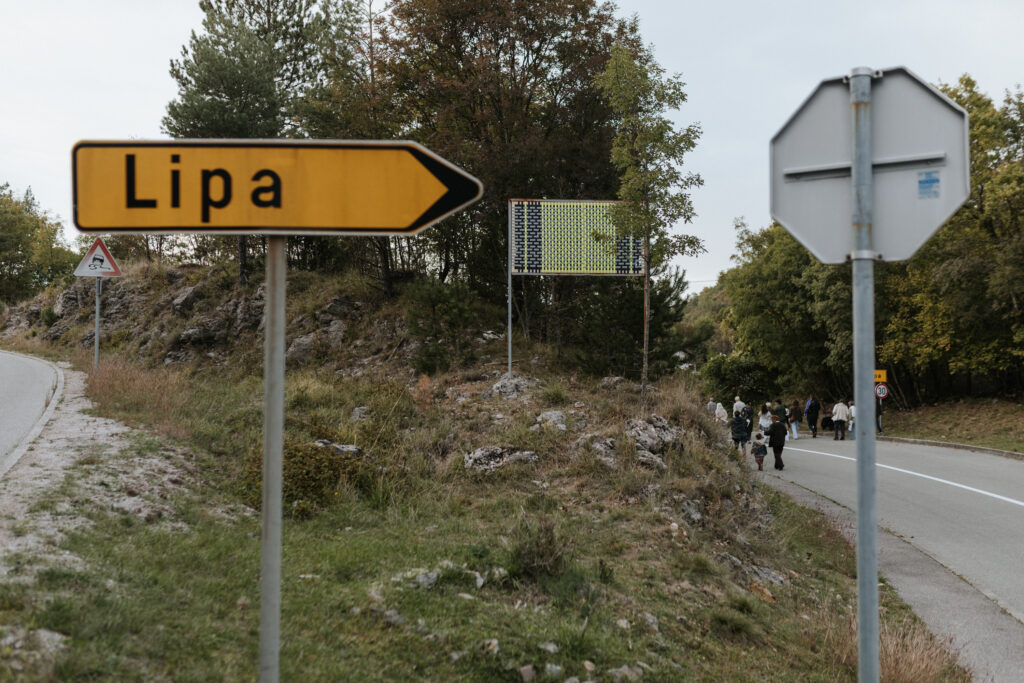
Pletem te [ I Knit You ] (1) is a support intervention on an old advertising frame located at the very entrance to the village of Lipa. The empty advertising frame is envisioned as an open wound requiring a binding to heal properly. The hand-knitted intervention consists of 56 fabric strips, 2.5 cm wide and colored yellow, gray, and blue, stretched across a fir wood frame and secured with metal fasteners. The completed piece was then inserted into the advertising frame.
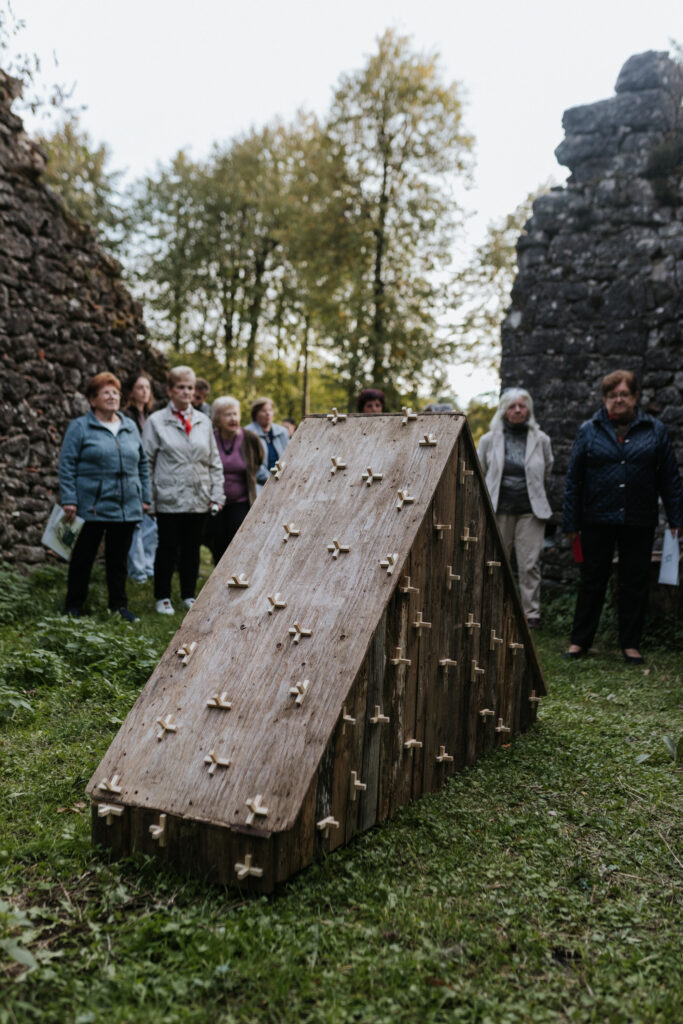
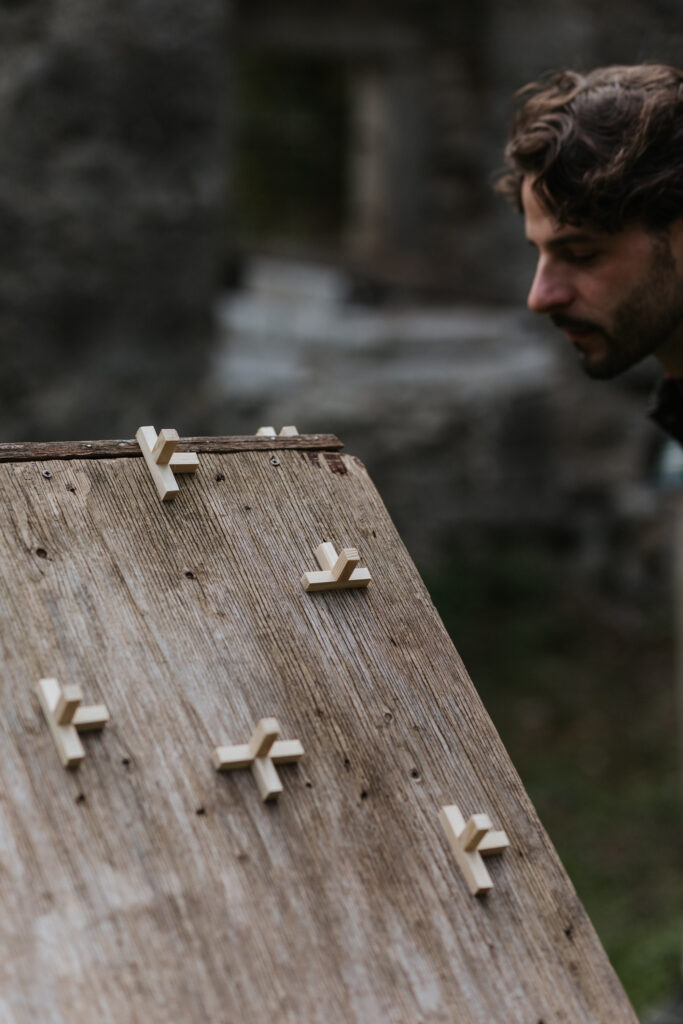
Gradim te [ I Build You ] (2) is a support intervention situated within the remains of a ruin by the main road of the village. The intervention is constructed almost entirely from various types of old timber found on-site. The wood is shaped into a prism resembling a roof, a structural element the ruin lacks. Fir-wood connectors, so-called “helpers”, are attached to the structure on all sides; through their contrast with the old timber, they allude to support and conservation. The wooden structure is then positioned in the center of the ruin.
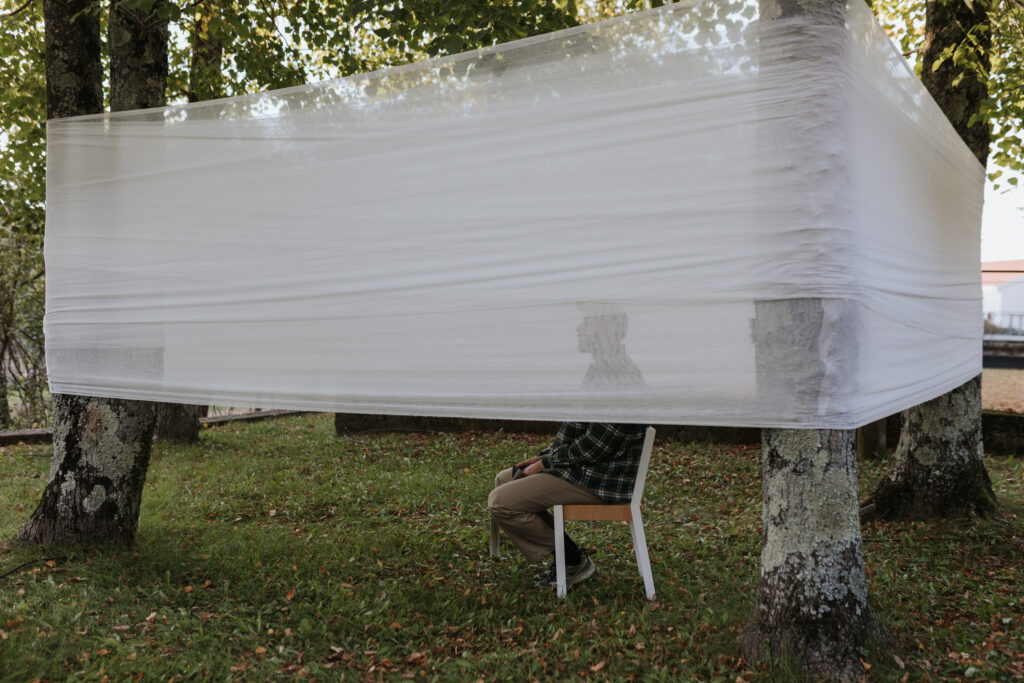
Obavijam te [ I Wrap You ] (3) is a support intervention situated next to the bocce court. Three trees were chosen and wrapped in medical cotton gauze, extending from approximately fifty centimeters above the ground up to the first branches and thereby creating a triangular space. A single chair is placed in the center of this area. The gauze, a material typically used for wound dressing, here serves to stabilize the space between the three trees. The observer sits within the space, reflecting on the symbolism of the gauze, the act of wrapping, and the sense of intimacy it creates.
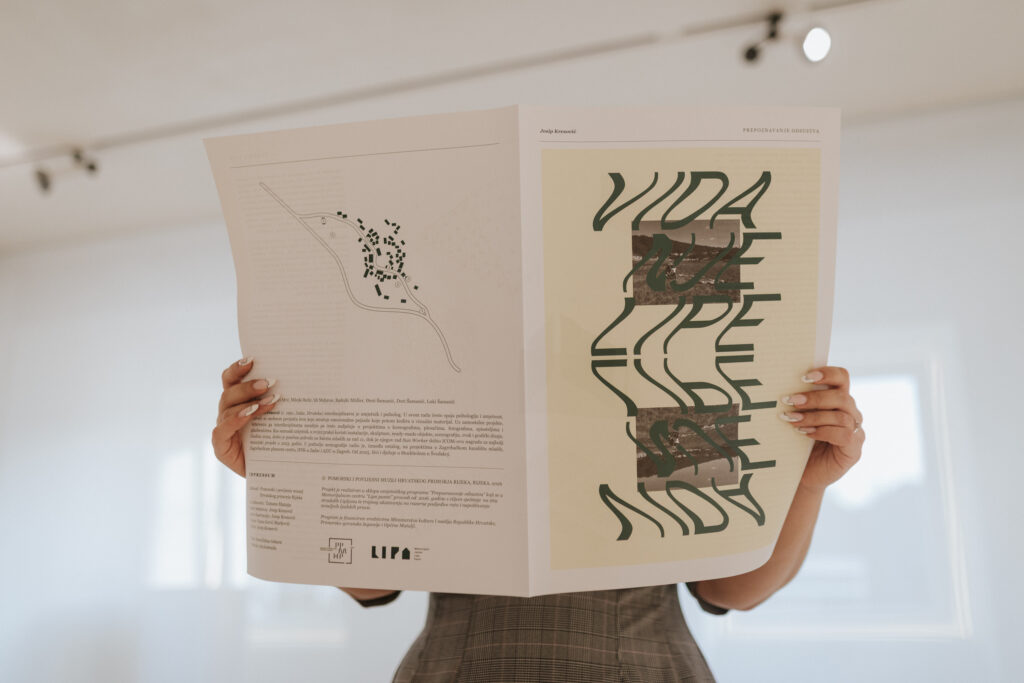
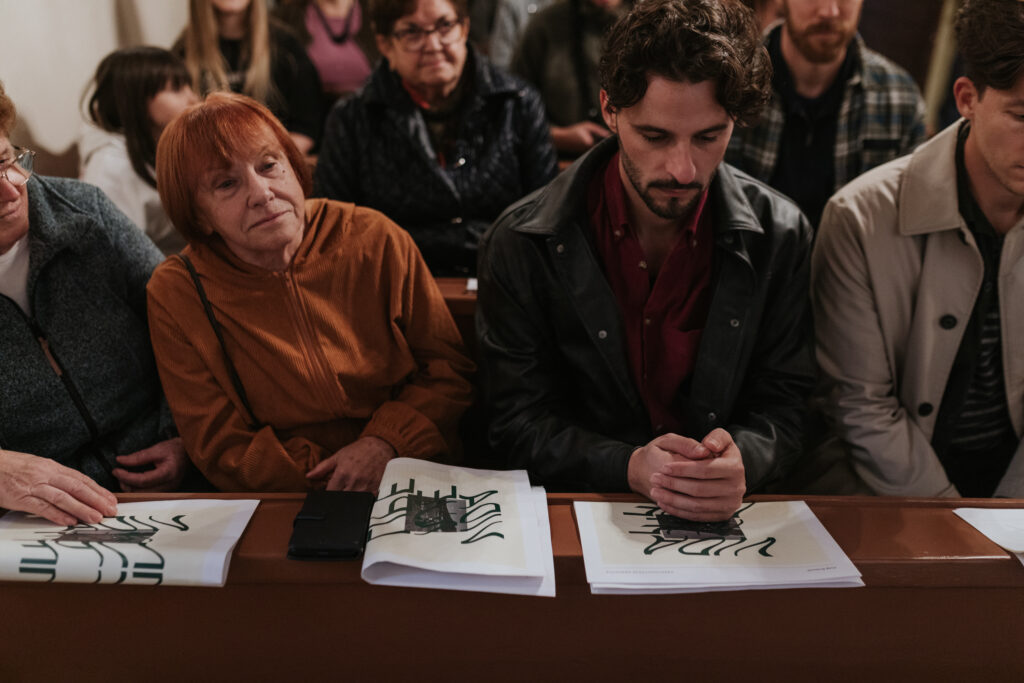
Čitam te [ I Read You ] (4) is a support located in the exhibition spaces of the Memorial Center “Lipa pamti”. It encompasses everything that the project “Vidanja Lipe” encompasses and serves simultaneously as both a guide and a map. The content of it is printed in a newspaper format in 269 copies—one for each of the 269 people killed in Lipa on April 30, 1944.
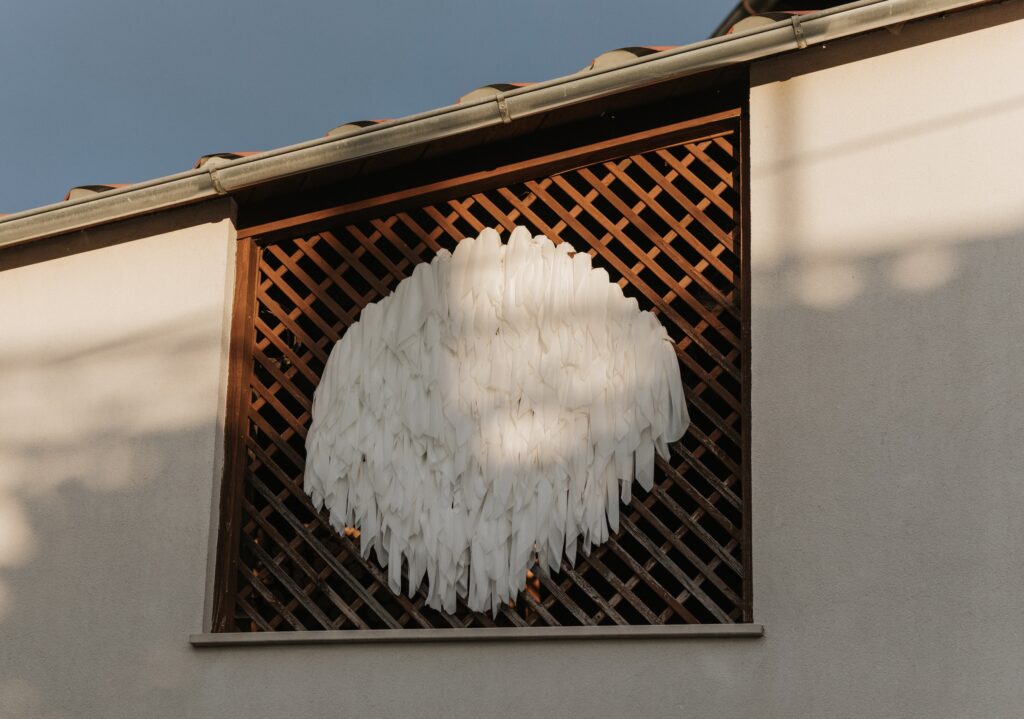
Vezem te [ I Bind You ] (5) is the only support intervention that uses a private space as a site for mending. One hundred and twenty-nine knots made of marquisette, a fabric typically used for curtains, are tied onto a handmade window lattice. These knots are tied at the intersections of the slats, forming a circle, and metaphorically stabilize the window lattice while it heals. If an observer pauses and waits a few minutes, they will notice the knots coming to life in the airflow.
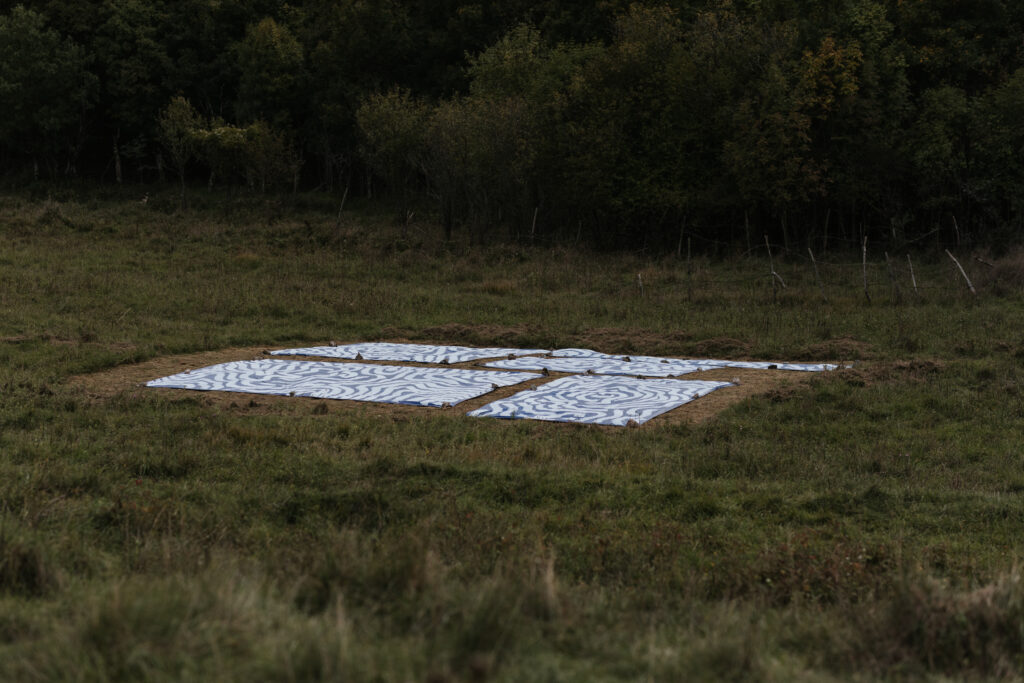
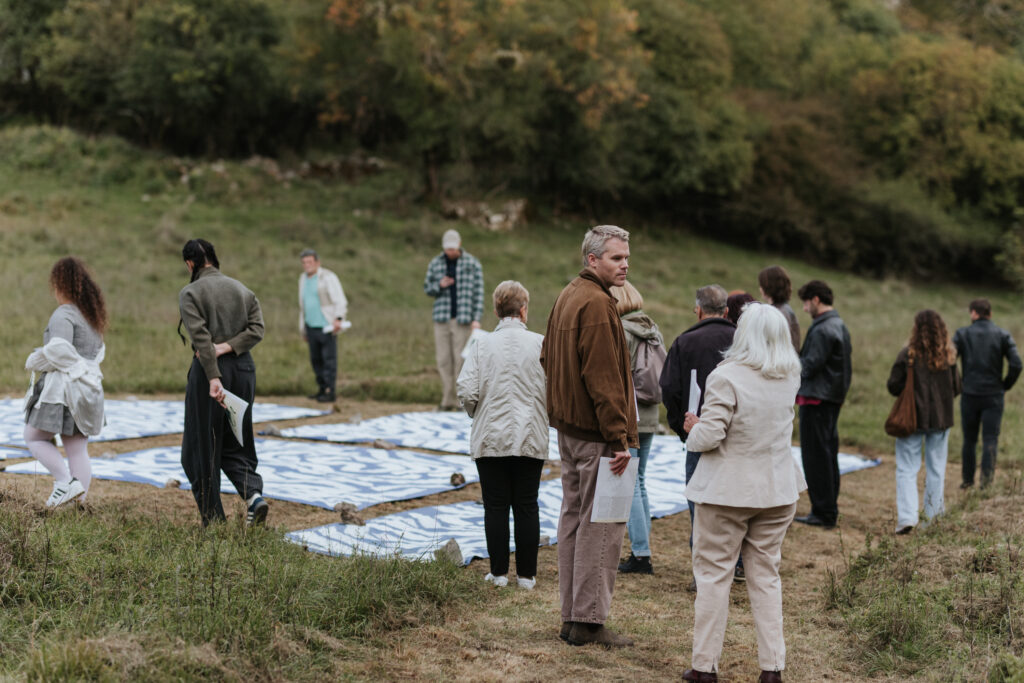
Pokrivam te [ I Cover You ] (6) is a support intervention situated on an open grassy area across from the memorial to the victims of Lipa. The installation consists of five plastic covers anchored by stones gathered locally. A simple, repetitive circular wave pattern drawn on the sheets signifies the continuity of life and resilience, while also evoking the meditative nature of art therapy. The intervention also draws inspiration from soil solarization—a natural disinfection process in which covering the ground raises its temperature, thereby destroying pathogenic fungi and other pests. Passersby are drawn by the color of the covers and the patterns upon them; they step off the road to observe a site where the process of soil healing is transformed into an artistic gesture.
Čujem te [ I Hear You ] (7) is the final support intervention, situated in the Chapel of St. Jelene Križarice. Local women from Lipa, specifically five women and one young girl, participated in the creation of this intervention. Standing among the chapel’s wooden pews, they sang hymns typically performed during Mass. Recordings of their singing were used to create an ambient composition played through speakers inside the chapel. The observer sits on a pew and absorbs the sound, which serves as a therapeutic tool for processing trauma.